Quilting
Flying Geese Calculator
Get flying geese cutting sizes for both the traditional one-at-a-time method and the no-waste four-at-a-time method, for any finished size.
- Updates as you type
- Inches or centimetres
- Copy or print your results
Calculator
Your cutting numbers
Enter your measurements above
JavaScript required for calculations
What size do I cut for 2" × 4" flying geese?
For flying geese that finish at 2" × 4" with a 1/4" seam allowance:
You enter
- Finished height × width
- 2" × 4" (5.08 cm × 10.16 cm)
- Seam allowance
- 1/4" (0.64 cm)
You get
- Traditional: goose rectangle
- 4-1/2" × 2-1/2" (11.5 cm × 6.4 cm)
- Traditional: sky squares (×2)
- 2-1/2" (6.4 cm)
- No-waste: large square (×1)
- 5-1/4" (13.4 cm)
- No-waste: small squares (×4)
- 2-7/8" (7.4 cm)
The formula: traditional pieces add 2 × seam allowance to each finished dimension; no-waste uses width + 1-1/4" and height + 7/8".
Frequently asked questions
What size do I cut for flying geese?
It depends on the method (sizes here assume a 1/4" seam). Traditional: cut one rectangle the finished size plus 1/2" each way and two sky squares the finished height plus 1/2". No-waste: cut one large square the finished width plus 1-1/4" and four small squares the finished height plus 7/8" — they make four geese at once.
What is the no-waste flying geese method?
Also called four-at-a-time: place two small squares on opposite corners of the large square, sew either side of the diagonal, cut, add the remaining small squares, and sew and cut again. You get four identical geese with no trimmed-off triangles to throw away.
Why are flying geese twice as wide as they are tall?
The classic goose is a 2:1 rectangle — for example 2" × 4" finished — because the two sky triangles meet exactly at the top center. Other ratios still sew together, but the point won't land at the center, so this calculator warns you when the ratio isn't 2:1.
Which flying geese method is more accurate?
The traditional stitch-and-flip method is forgiving for beginners and easy to trim. The no-waste method is faster and saves fabric, but cutting and seam accuracy matter more; many quilters cut slightly oversized and trim with a flying geese ruler.
Related tools
Which quilting machine should I use for this project?
Three picks from starter to step-up, sold in Canada and the US. Want a match for your budget? Take the machine picker.
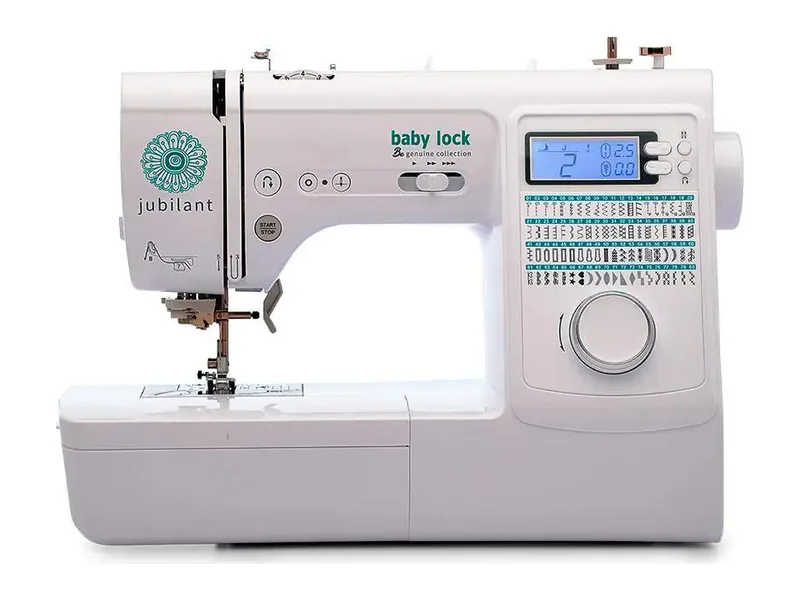
The first quilter
Baby Lock Jubilant
CA$899 · US$699
80 built-in stitches · Computerized · 1-step buttonhole
See it at your shop →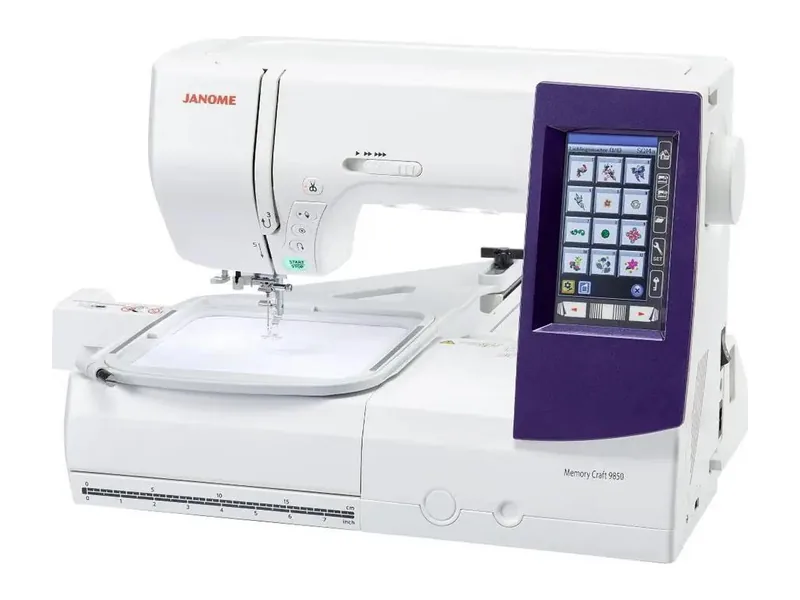
Quilt and embroider
Janome MC9850
CA$2,299 · US$1,499
6.7" x 7.9" embroidery field · 200 built-in stitches · 175 built-in designs
See it at your shop →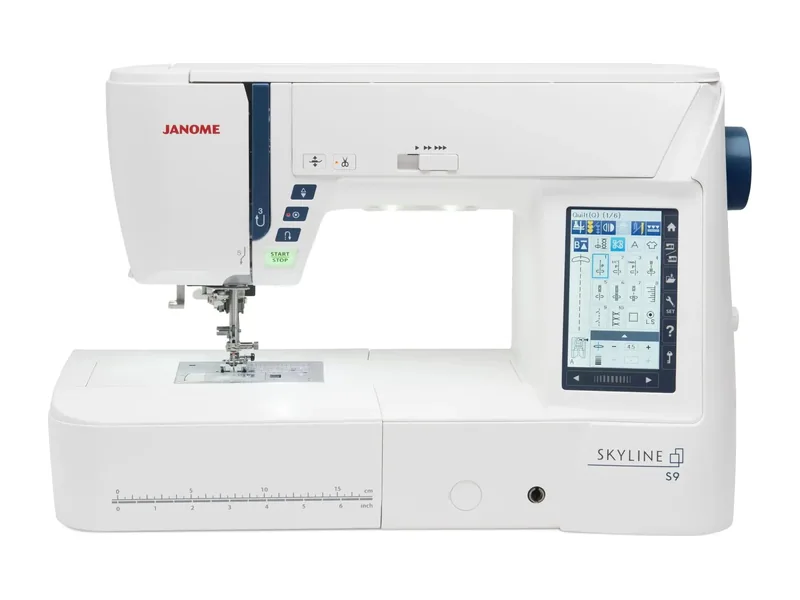
The forever upgrade
Janome Skyline S9
CA$3,999 · US$3,999
8.3" throat space · 250 built-in stitches · AcuFeed Flex dual feed
See it at your shop →
We may earn a commission when you buy through these links. It never changes your price.